
Steam Sterilizer Validation: IQ, OQ and PQ for Procurement Teams
Autoclave validation demonstrates that a steam sterilizer is installed correctly, operates within defined limits and consistently achieves the required performance for its intended loads. IQ, OQ and PQ are connected activities: the supplier supports equipment evidence, while the buyer remains responsible for defining use, approving protocols and maintaining routine control.
What autoclave validation proves
Autoclave validation is a documented, risk-based process used to show that a sterilizer and its operating procedures are suitable for a defined application. It does not mean that one successful cycle proves every future load is sterile. The evidence must relate to the equipment, cycle, load configuration, packaging, utilities and operating instructions used at the site.
For procurement teams, validation should be treated as a lifecycle requirement rather than a commissioning formality. The contract should define the intended loads, acceptance criteria, responsibilities, records and response to deviations before the equipment is delivered. EN ISO 17665 provides a framework for moist heat sterilization process development, validation and routine control; EN 285 and EN 13060 may be relevant according to equipment type and application.
- IQ confirms that the delivered installation matches the approved purchase and site requirements.
- OQ tests whether functions and controls operate as specified across defined operating conditions.
- PQ demonstrates repeatable performance with representative loads and approved loading procedures.
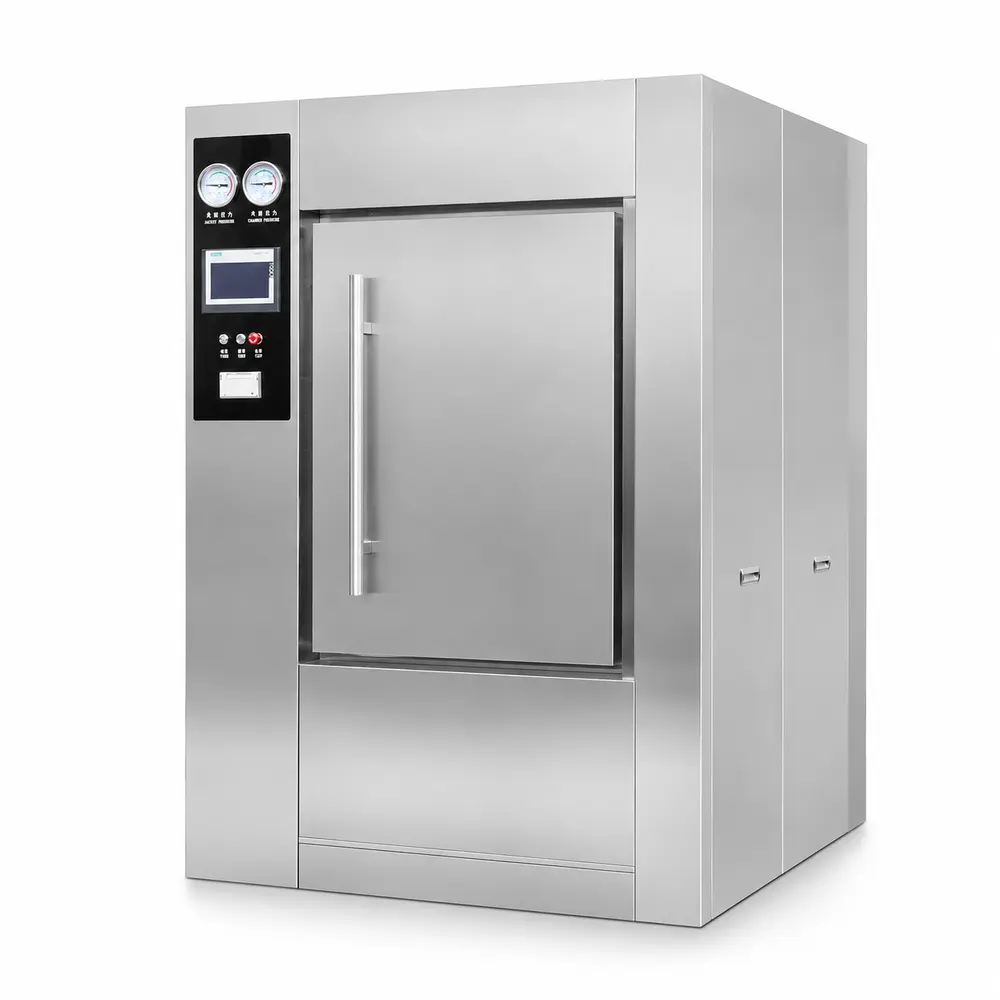
IQ: installation qualification for an autoclave
Installation qualification verifies that the correct equipment has arrived, been identified and installed in the specified location. It normally covers the chamber, doors, piping, drains, electrical connections, steam supply or generation system, ventilation, water quality and other utilities that can affect operation. The review should also confirm that safety clearances, access, environmental conditions and supporting services are suitable.
The supplier typically provides equipment identification, drawings, manuals, utility requirements, calibration information and installation records. The buyer or site representative confirms that the room, services and supporting infrastructure meet the agreed requirements. Any difference between the approved design and the installed condition should be recorded, assessed and closed before OQ begins.
| IQ activity | Supplier contribution | Buyer or site responsibility |
|---|---|---|
| Equipment identity | Provide model, serial, component and software records | Verify delivered items against the purchase order |
| Utilities and installation | Provide connection requirements and installation support | Provide suitable services, room conditions and access |
| Documentation | Supply manuals, drawings and maintenance information | Approve controlled copies and local procedures |
| Calibration status | Provide instrument certificates or calibration records where agreed | Confirm traceability, due dates and site acceptance |
OQ: operational qualification and functional testing
Operational qualification tests whether the sterilizer performs its specified functions when operated without, or with a controlled representative load as defined by the protocol. Testing may include door interlocks, alarms, emergency functions, chamber evacuation, steam admission, temperature and pressure control, recording systems, cycle selection, drying functions and protection against unsafe operation.
The OQ protocol should state the test method, expected result, acceptance limit, instrument identification and treatment of failures. The supplier may execute technical tests, but the buyer should witness critical checks and approve the final report. OQ is also the point at which operators can confirm that displays, prompts, alarms and records are understandable enough for routine use.
- Use calibrated or otherwise controlled test instruments appropriate to the parameter being measured.
- Test normal operation and relevant fault conditions rather than checking only a successful standard cycle.
- Record software or control-system versions when they can affect cycle operation or data integrity.
- Do not accept unexplained deviations as observations that can simply be carried into PQ.
PQ: performance qualification in actual use
Performance qualification demonstrates that the complete process works repeatedly with the loads the facility intends to sterilize. A valid PQ considers load density, instrument placement, packaging, containers, porous materials, liquids or other relevant products, as well as the loading pattern and unloading procedure. The selected challenge should represent the most difficult or highest-risk routine conditions, not only an easy empty-chamber test.
The buyer normally owns the definition of representative loads and the decision that the evidence is acceptable. The supplier can provide cycle knowledge, loading guidance and technical assistance, but cannot decide what the facility is authorized to process. PQ should include predefined repetitions, physical measurements and, where required by the quality system, appropriate biological or chemical indicators. Indicator use should supplement, not replace, evaluation of physical cycle data.
| Topic | Procurement or quality question | Evidence to retain |
|---|---|---|
| Load selection | Which routine and worst-case loads must be covered? | Approved load list and rationale |
| Loading pattern | How will items be arranged, spaced and identified? | Photographs, diagrams or controlled loading instructions |
| Acceptance criteria | Which time, temperature, pressure and indicator results are acceptable? | Approved protocol with limits and test records |
| Repeatability | How many successful runs are required by the site procedure? | Cycle printouts, electronic records and deviation review |
Who is responsible for each validation activity?
Responsibility should be divided in the quality plan, not inferred from the equipment quotation. The supplier is generally responsible for delivering equipment that matches the agreed design, supporting installation, explaining functions and providing accurate technical documentation. The buyer is responsible for the intended use, site readiness, trained personnel, controlled procedures, load definitions and final release for operation.
An independent validation specialist or quality unit may review protocols and reports, particularly where the facility has limited internal expertise. The end user remains responsible for ensuring that operators follow the approved process. Procurement should require a named contact for technical questions, validation support and corrective actions, while quality assurance should control approvals, deviations and change management.
- Procurement: define contractual deliverables, acceptance gates and document ownership.
- Engineering or facilities: prepare utilities, room conditions and installation records.
- Supplier: provide technical information, training support and agreed test assistance.
- Quality assurance: approve protocols, assess deviations and release the process.
- CSSD, laboratory or dental users: define loads, loading methods and routine operating practice.
Contract documents to require for autoclave validation
A strong contract converts validation from a general promise into measurable deliverables. The purchase specification should identify the intended application, applicable standards, cycle types, documentation format, training scope, acceptance process and requirements for changes after approval. If the contract is silent, the buyer may receive a technically functional sterilizer without enough evidence to support regulated or quality-controlled operation.
Ask for a document index at the quotation or design stage, then make delivery of the agreed documents an acceptance condition. The documentation should be supplied in a controlled, readable format and should identify revisions. Where EN 868 is relevant, packaging materials and barrier systems should be considered as part of the overall process rather than treated as an unrelated purchasing issue.
| Document | Why the buyer needs it | When to review it |
|---|---|---|
| Approved URS and functional specification | Defines intended use, risks and acceptance requirements | Before order and before design approval |
| Site and utility requirements | Allows facilities teams to prepare the installation correctly | Before site preparation |
| IQ, OQ and PQ protocols | Defines methods, limits, responsibilities and approvals | Before execution of each stage |
| Calibration and instrument records | Supports confidence in measured time, temperature and pressure | At installation and during the equipment lifecycle |
| Training, maintenance and spare-parts information | Supports competent operation and continued control | Before handover and during change review |
| Final reports, deviations and corrective actions | Shows whether acceptance criteria were met and issues resolved | Before release for routine use |
How validation connects with routine monitoring
Validation establishes the approved process; routine monitoring checks that each subsequent cycle remains within that validated state. Operators should review cycle time, temperature, pressure, alarms, load identity and any other required records. They should also confirm correct loading, packaging integrity, indicator results where used, and completion of required drying or cooling steps.
Routine monitoring is not a substitute for PQ, and PQ is not a substitute for daily control. Requalification or formal review may be needed after major repairs, software changes, relocation, changes to utilities, new load families, repeated failures or significant changes in packaging. The quality system should define when a deviation requires investigation, repeat testing, temporary suspension or full revalidation.
- Define who reviews each cycle and how review is documented.
- Trend alarms, failed indicators, wet loads, aborted cycles and recurring deviations.
- Keep maintenance, calibration and validation records linked to equipment identity.
- Use change control before introducing new loads, packaging or cycle parameters.
Procurement decision checklist for autoclave validation
Before comparing quotations, procurement teams should convert operational needs into validation-ready requirements. Consider the load families, throughput pattern, available utilities, data records, cleaning and maintenance access, operator training and local quality procedures. A useful specification describes what must be demonstrated without inventing technical limits that have not been justified by the process.
A supplier discussion should end with a written validation plan, a document list and clear acceptance gates. Buyers evaluating Horizontal Autoclaves can also use the equipment category to structure questions about chamber access, loading practice and CSSD workflow. For unresolved operating questions, consult the autoclave FAQ and send project-specific requirements to our export team.
- Define intended loads and worst-case challenge loads before requesting validation support.
- Require protocols and acceptance criteria for IQ, OQ and PQ before execution.
- Specify document language, format, revision control and retention requirements.
- Make unresolved deviations visible in the final acceptance record.
- Plan routine monitoring, periodic review and change control before commissioning.
Key points
- IQ verifies the installation, OQ verifies functions and controls, and PQ verifies repeatable performance with representative loads.
- The supplier supports technical evidence, while the buyer owns intended use, load definition, procedures and final acceptance.
- Contract documents should include approved protocols, acceptance limits, calibration records, training information and final reports.
- Routine monitoring confirms that the validated process remains controlled during everyday operation.
- Changes to utilities, software, equipment condition, packaging or loads should be assessed through change control.
Frequently asked questions
Is IQ, OQ and PQ required for every steam sterilizer?
The required depth depends on the application, quality system, risk assessment and applicable regulatory or contractual requirements. A healthcare, laboratory or dental facility should define its validation approach before purchase and document the rationale for any reduced scope.
Can the supplier perform the complete validation?
The supplier can provide technical support and execute agreed tests, but the buyer should retain responsibility for intended use, load selection, procedure approval and final release. An independent reviewer may be useful where internal validation expertise is limited.
Does a successful biological indicator prove that the cycle is validated?
No. Biological indicators provide important process challenge information, but validation also requires defined loads, physical measurements, approved procedures and review of repeatability. Indicator results should be interpreted together with cycle records and other evidence.
When should a sterilizer be requalified?
Requalification should be considered after relocation, major repair, control or software changes, utility changes, new load types, repeated failures or other events that could affect performance. The quality system should define triggers and the extent of testing.
What should operators monitor after validation?
Operators should review each cycle against approved parameters, loading instructions and alarm requirements. Facilities should also control maintenance, calibration, packaging, indicators where applicable, deviations and trends so that loss of process control is detected promptly.
Discussing a specific project?
Send the load type, throughput and destination country. The export team replies with the models that fit and the documents you will need.
Contact the export teamSee Horizontal Autoclaves