
Laboratory Autoclave Requirements: Media, Waste and Biosafety
A laboratory autoclave must be selected around the load, not only chamber volume or maximum temperature. Media require controlled heating and cooling, while biohazard waste requires validated air removal, exposure and handling controls that a hospital instrument-cycle datasheet may not describe.
Why laboratory autoclave loads differ from instrument loads
Instrument loads are usually solid, porous or wrapped items that must reach sterilization conditions throughout the pack. Laboratory loads are more varied: culture media, aqueous solutions, pipette tips, glassware, animal bedding, disposable plastics and sealed or vented biohazard containers may be processed in the same department. Each load type changes heat transfer, air removal, pressure behavior and cooling requirements.
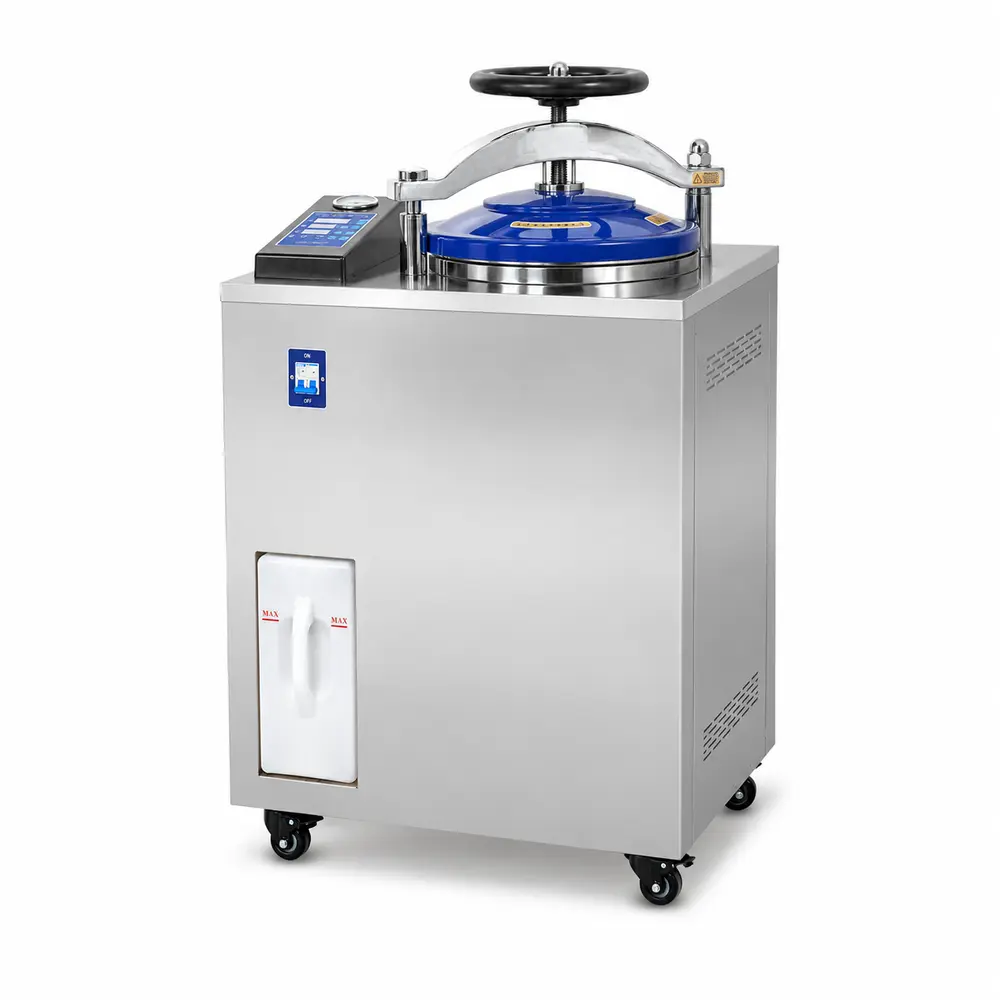
A laboratory autoclave therefore needs a load strategy rather than a single universal cycle. The specification should explain which loads are permitted, how they are arranged, whether containers must be open or vented, and how the operator confirms that the intended load has received the required treatment. The Vertical Autoclaves range is one equipment category laboratories may review when floor space, loading method and batch size are important.
For procurement, ask for cycle descriptions and operating instructions, not only chamber dimensions. A hospital-oriented datasheet may emphasize wrapped instruments, porous loads and drying, while a laboratory buyer also needs information about liquid sensing, controlled exhaust, spill management and waste containment.
- Separate liquid, solid-waste, glassware and porous-load procedures.
- Define acceptable container types, fill levels and closure positions.
- Require clear indications when a cycle is unsuitable for the selected load.
Laboratory autoclave requirements for media and liquids
Liquid sterilization is a heat-transfer problem as much as a steam problem. Steam may sterilize the outside of a vessel while the liquid center is still below the required temperature. The cycle must therefore account for vessel size, liquid volume, viscosity, starting temperature and the position of the load probe. A cycle designed for empty instruments should not be assumed suitable for bottles or flasks.
Controlled cooling is equally important. Rapid exhaust can cause boiling, foaming, boil-over, broken glass or distortion of plastic containers. A liquid cycle typically uses a managed exhaust phase and may continue cooling under controlled pressure until the load is safe to remove. The final temperature and pressure limits should be defined by the validated load recipe and container instructions.
The buyer should specify whether the laboratory needs a flexible load probe, a reference temperature sensor, or both. A load probe can support cycle control or documentation based on the temperature inside a representative container, but its location and installation must be consistent. Probe penetration, sealing, cleaning and calibration arrangements should be included in the technical discussion.
| Requirement | Why it matters | Procurement question |
|---|---|---|
| Load temperature measurement | The chamber may reach the target condition before the liquid center does. | Can the cycle use a load probe or another defined method for representative liquid loads? |
| Controlled exhaust and cooling | Uncontrolled pressure release can cause boiling, spills and container damage. | How are exhaust rate, pressure release and end-of-cycle temperature managed? |
| Load definition | Bottle size, fill volume and container type affect heat penetration. | Are permitted vessel types, fill limits and arrangement instructions documented? |
| Cycle records | A printed or electronic record supports review of time, temperature and pressure. | What values are recorded, and can records be linked to a load or batch identifier? |
Biohazard waste cycles and containment
Biohazard waste presents a different risk profile from clean laboratory equipment. The objective is not simply to expose an empty chamber to steam; it is to treat the waste mass while limiting leakage, aerosol release and operator contact. Bags, sharps containers, culture plates and bedding can obstruct steam access or retain air, so loading rules and container selection are essential parts of the system.
Waste-cycle requirements should cover preconditioning, exposure, exhaust, cooling and unloading. The facility should define whether waste is processed in autoclavable bags, rigid secondary containers or dedicated trays, and whether liquids are present. The cycle should be selected and validated for the worst credible load rather than the easiest daily batch.
Biosafety procedures must also address what happens after the cycle. Operators need a safe method for opening the chamber, checking containers, handling spills and transferring treated waste. The autoclave itself is not a substitute for risk assessment, segregation, personal protective equipment, local waste rules or laboratory biosafety procedures.
| Area | What to define | Evidence to request |
|---|---|---|
| Waste composition | Bagged solids, sharps, liquids, bedding or mixed loads | A written load matrix identifying permitted and prohibited combinations |
| Containment | Bag type, secondary tray, lid position and spill control | Loading instructions and container compatibility information |
| Cycle control | Air removal, exposure, exhaust and cooling behavior | Cycle description with critical parameters and acceptance criteria |
| Operator safety | Unloading temperature, protective equipment and spill response | Risk assessment, work instruction and training requirements |
Air removal, probes and load configuration
Steam sterilization depends on contact between saturated steam and every relevant surface. Trapped air can create cold areas, especially inside porous materials, waste bags, tubing and irregular containers. A laboratory should decide whether it needs gravity displacement, assisted air removal or a pulsed vacuum approach based on its actual loads. Vacuum capability alone does not make every cycle suitable for liquids or waste.
Load probes are useful only when their purpose is clear. A probe may monitor a representative liquid, support a conservative control point or provide additional batch information. It should not be treated as proof that every item in a mixed load reached the same condition. Probe position, attachment, calibration and cleaning should be documented, and the laboratory should identify which loads require probe-based control.
Loading is part of validation. Baskets, trays and containers should allow steam circulation and should not block drains, sensors or chamber surfaces. Overloading can extend come-up time, delay cooling and create uneven conditions. A practical specification includes diagrams or written rules for the largest, densest and most difficult routine load.
- Identify the hardest-to-sterilize location in each representative load.
- Keep liquid loads separate from porous or waste loads unless the cycle is specifically validated for both.
- Define probe placement with a diagram and a repeatable loading method.
- Record container type, fill volume and load mass during validation.
What a laboratory autoclave datasheet should mention
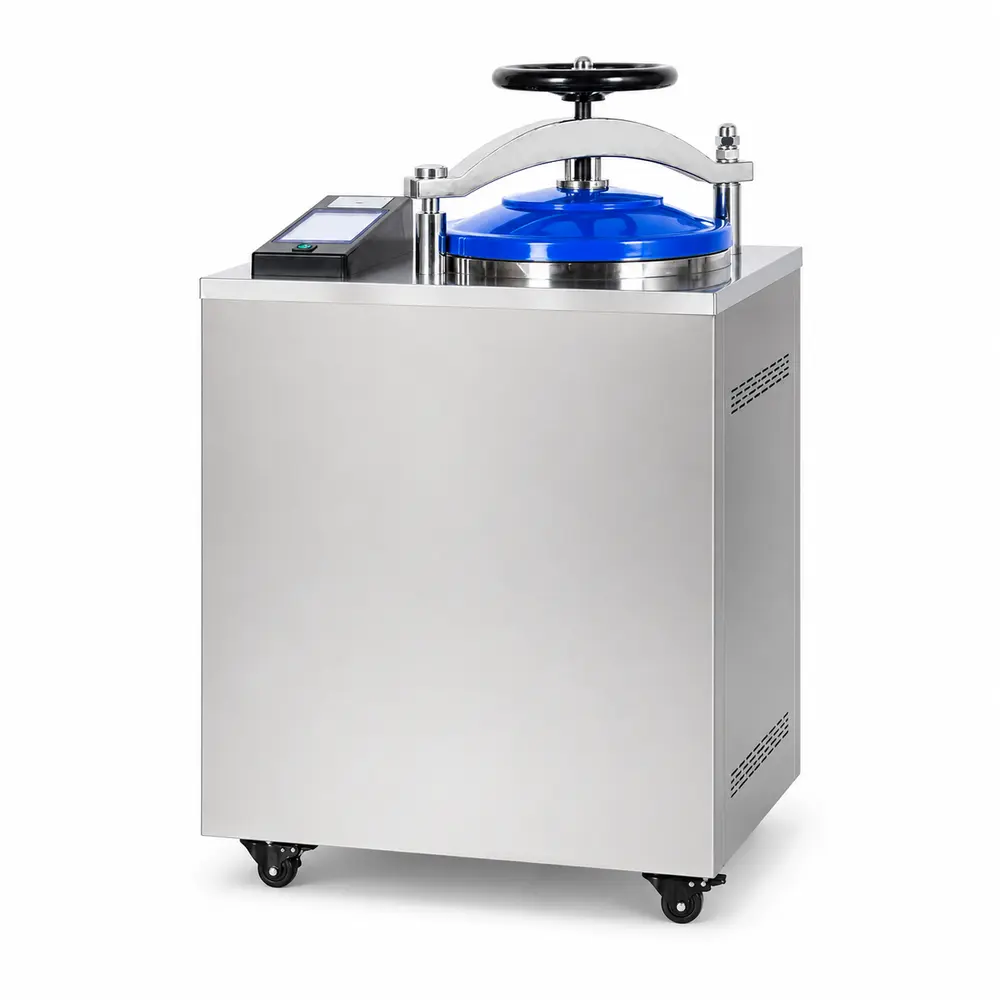
A general hospital sterilizer datasheet may list chamber capacity, temperature settings, pressure, electrical supply and program count. Those details remain useful, but they do not answer the laboratory questions that affect safe operation. The laboratory specification should describe usable load space, liquid handling, waste handling, probe arrangements, cooling behavior, drainage, cleaning and record retention.
Buyers should also review the user interface and service access. Operators need an unmistakable indication of cycle phase, abnormal conditions and whether the load is safe to open. Maintenance staff need access to drains, sensors, seals and safety devices without creating unnecessary contamination risks. If the unit will serve different departments, access control and user-level permissions may be relevant.
Use the autoclave FAQ during early technical review to clarify operating concepts, then ask suppliers to respond against a written load schedule. For standards context, EN 13060 addresses small steam sterilizers, EN 285 addresses larger steam sterilizers, and EN ISO 17665 provides a framework for developing, validating and routinely controlling moist-heat sterilization processes. These standards should inform the specification, while the applicable edition and local requirements should be confirmed for the project.
| Datasheet topic | Laboratory question | Reason for inclusion |
|---|---|---|
| Liquid programs | Are liquid loads supported, and how are exhaust and cooling controlled? | Protects media, vessels and operators from boil-over and thermal shock. |
| Waste programs | Can the intended biohazard waste configuration be described and validated? | Links cycle selection to containment and biosafety procedures. |
| Probe provision | What probe options, locations and records are available? | Supports representative load monitoring and repeatable validation. |
| Documentation | Are loading rules, prohibited loads and fault responses supplied? | Reduces operator variation and unsafe improvisation. |
| Cleaning and drainage | How are condensate, spills and residues removed? | Supports hygiene, maintenance and reliable daily operation. |
Validation, routine monitoring and records
The laboratory should establish a documented process for commissioning, validation and routine monitoring. The process normally begins with a load risk assessment, followed by selection of representative and worst-case loads. Physical measurements, chemical indicators and biological indicators may be used according to the facility procedure, load risk and applicable requirements. No indicator replaces correct loading or a properly controlled cycle.
Validation should distinguish between media, waste and instrument-like loads. For liquids, record vessel type, fill volume, probe location, come-up behavior, exposure and cooling. For waste, record bag arrangement, container type, load density, exhaust behavior and unloading controls. Any change in container, load mass, cycle recipe or loading pattern should trigger a documented review.
Cycle records should be legible, retrievable and protected from unauthorized alteration. At minimum, the laboratory should be able to associate a batch with the selected cycle, date, operator, critical time and temperature information, alarms and release decision. Retention periods should follow the laboratory quality system, biosafety program and applicable regulatory or contractual requirements.
- Validate the hardest routine load, not only an empty chamber.
- Define acceptance criteria before testing begins.
- Investigate failed indicators, abnormal records and unexpected container damage.
- Keep maintenance, calibration and corrective-action records with cycle documentation.
Installation, workflow and supplier questions
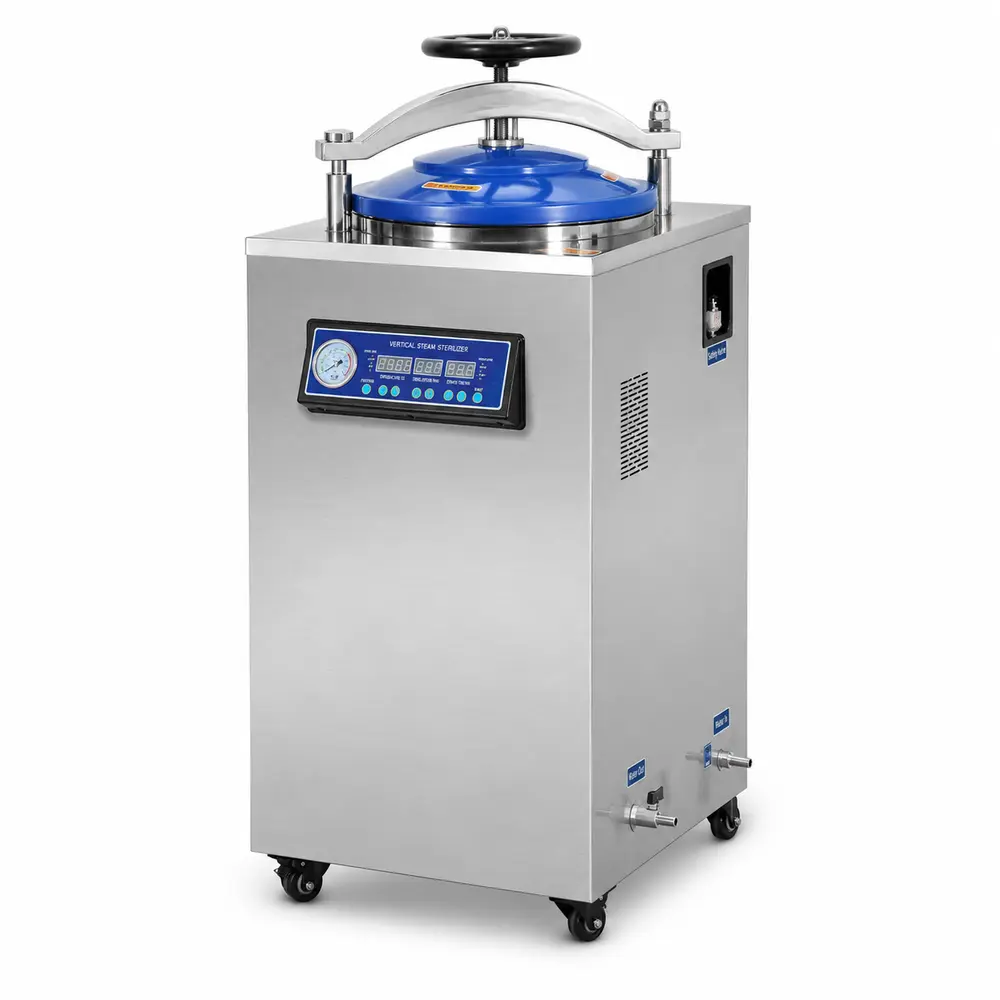
Installation planning should include utilities, ventilation, drainage, floor loading, clearance, door movement and the path for clean and contaminated materials. A vertical configuration may suit a laboratory with limited floor area, while a horizontal arrangement may better support trolley loading or higher throughput. The correct choice depends on workflow, load size, operator ergonomics and service access rather than on chamber volume alone.
Map the complete process from preparation to release: where loads are assembled, how contaminated materials enter, where treated materials cool, and how spills are managed. Separate clean and dirty traffic where the facility design requires it. Consider whether the autoclave will be operated by one laboratory or shared across departments, because shared use increases the importance of standardized recipes and booking controls.
When technical questions remain, contact our export team with a load schedule rather than a general request for a sterilizer. Include media type, vessel dimensions, fill volume, waste composition, container arrangement, daily batch frequency, available utilities and required records. This information allows a supplier to discuss a suitable configuration without making assumptions from a hospital instrument application.
- Provide a floor plan and utility schedule during tender review.
- List the heaviest, largest and most heat-sensitive routine loads.
- Ask how software, sensors and safety devices are maintained and verified.
- Confirm operator training, spare-part support and technical documentation requirements.
Key points
- Specify the laboratory autoclave by load type, not only chamber size or temperature.
- Liquid media require controlled heating, load-aware monitoring and managed cooling.
- Biohazard waste specifications must include containment, loading, exhaust and unloading procedures.
- Load probes support monitoring only when their location, purpose and calibration are defined.
- A useful datasheet should describe cycles, prohibited loads, records, cleaning and safety controls.
- Validation and routine monitoring should be based on representative and worst-case laboratory loads.
Frequently asked questions
Can one laboratory autoclave process media, waste and glassware?
It may be possible when the equipment and cycles are designed for those loads and each load category is properly evaluated. Mixed loads should not be assumed acceptable because liquids, porous waste and glassware heat and cool differently. Separate validated recipes and clear loading rules are normally needed.
Why is cooling important for liquid media?
Liquid loads can boil violently if pressure is released too quickly. Controlled exhaust and cooling reduce the risk of boil-over, broken vessels, container distortion and operator exposure. The permitted end temperature should be defined by the load and container instructions.
Does a load probe prove that a waste cycle is effective?
A probe provides information at its measurement location, but it does not represent every part of an irregular or dense waste load. Effective monitoring also depends on representative loading, validated cycle parameters and the facility's biological and procedural controls. Probe use should therefore be specified as part of a complete validation plan.
Should a laboratory choose vacuum operation for every load?
No. Air-removal capability should match the loads being processed. Vacuum-assisted cycles can help with certain porous or difficult loads, while liquid cycles require controlled pressure release and cooling. The laboratory should select cycles based on documented load characteristics rather than on one feature alone.
Which standards should be considered when writing the specification?
EN 13060, EN 285 and EN ISO 17665 may be relevant depending on the equipment category, application and jurisdiction. EN 868 can also be relevant when sterilization packaging materials are part of the process. The tender committee should confirm the applicable editions, local rules and quality-system expectations before finalizing requirements.
Discussing a specific project?
Send the load type, throughput and destination country. The export team replies with the models that fit and the documents you will need.
Contact the export teamSee Vertical Autoclaves