
Autoclave Cycle Parameters: 121 °C vs 134 °C Explained
Autoclave temperature and time depend on the load, packaging, air removal and validated sterilization process. In general, 121 °C cycles use a longer holding time, while 134 °C cycles can be shorter, but neither setting is automatically better for every load.
How temperature, pressure and holding time work together
Steam sterilization relies on saturated steam contacting every exposed surface at the required temperature for the required time. Temperature and pressure are linked: as steam temperature rises, the pressure of saturated steam also rises. Pressure is therefore mainly a control and verification indicator; it is the temperature and steam contact that deliver the lethal effect.
The holding period begins only after the load and chamber have reached the required sterilization conditions. Heat-up, air removal, exposure, exhaust, drying and cooling are separate parts of a cycle. A displayed cycle duration may therefore be much longer than the programmed holding time, especially for dense, porous or liquid loads.
| Steam condition | Approximate pressure above atmosphere | Typical use of the reference |
|---|---|---|
| 121 °C | About 1 bar gauge | Longer exposure for liquids, waste and many general loads |
| 134 °C | About 2 bar gauge | Shorter exposure for compatible wrapped or unwrapped instruments |
Autoclave temperature and time for common load types
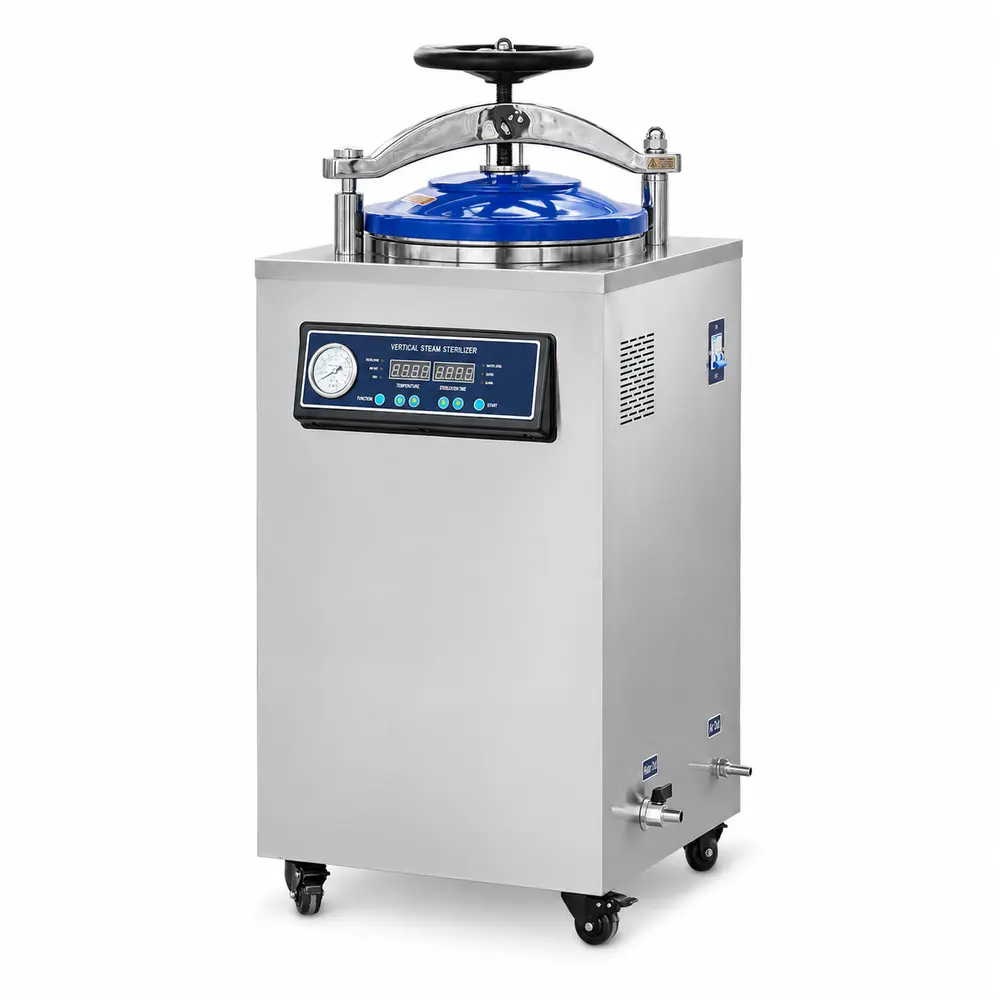
The correct cycle is selected by load composition and packaging, not by temperature alone. Wrapped instruments require effective air removal, steam penetration and drying. Porous textiles require sufficient conditioning and exposure, while liquids need controlled heating, gentle exhaust and cooling to reduce boiling, foaming or container damage.
The values below are typical planning ranges, not universal operating instructions or product specifications. Each facility should use the equipment manufacturer’s instructions, load configuration, container limits and a documented validation process. EN ISO 17665 provides a framework for developing, validating and routinely controlling moist-heat sterilization processes.
- These ranges are typical examples rather than acceptance criteria.
- A validated cycle may require a longer exposure than the nominal range shown.
| Load | Common temperature approach | Typical holding-time range | Important controls |
|---|---|---|---|
| Wrapped metal instruments | 134 °C or 121 °C, according to the validated process | About 5–30 minutes | Air removal, steam contact, load density and drying |
| Laboratory liquids | Usually 121 °C | About 15–40 minutes | Liquid volume, vented closures, slow exhaust and cooling |
| Medical or laboratory waste | Often 121 °C; higher settings only when compatible | About 30–60 minutes | Waste type, container penetration, safe exhaust and handling |
| Textiles and porous materials | 121 °C or 134 °C, according to the validated load | About 15–30 minutes | Air removal, packing density, steam penetration and drying |
Why 134 °C is not automatically better than 121 °C
A 134 °C cycle can achieve the required lethality in less exposure time because microbial inactivation generally accelerates as temperature increases. This can support efficient processing of compatible instruments, particularly when the load is well prepared and the sterilizer removes air effectively.
Higher temperature is not suitable for every material. Some liquids, plastics, elastomers, adhesives, biological preparations and sealed containers may deform, boil, leak or lose performance. A 121 °C cycle is often more appropriate for heat-sensitive loads or large liquid volumes because it allows gentler heat transfer and exhaust control.
A shorter exposure also does not mean a shorter complete cycle. Dense loads may require extended heat-up, drying or cooling. For wrapped instruments, residual moisture can compromise packaging integrity and subsequent storage, so a reliable dry result may be more important than a few minutes saved during exposure.
- Use 134 °C when the load, packaging and validated process are compatible.
- Use 121 °C when the load requires lower thermal stress or controlled liquid processing.
- Never reduce holding time solely to increase throughput.
Selecting autoclave temperature and time by load and cycle design
A pre-vacuum cycle is commonly selected for wrapped, porous or hollow loads because repeated air removal improves steam penetration. A gravity-displacement cycle may be suitable for simple solid items or some liquid loads, but trapped air can create cold spots in porous materials and narrow internal spaces. The chamber arrangement, packaging and loading pattern are part of the process.
For liquid cycles, containers should normally be compatible with pressure and temperature changes, and closures should permit pressure equalization. The exhaust phase should be controlled rather than abrupt. Waste cycles require attention to the waste container, liquid content, biological hazards and safe unloading procedure.
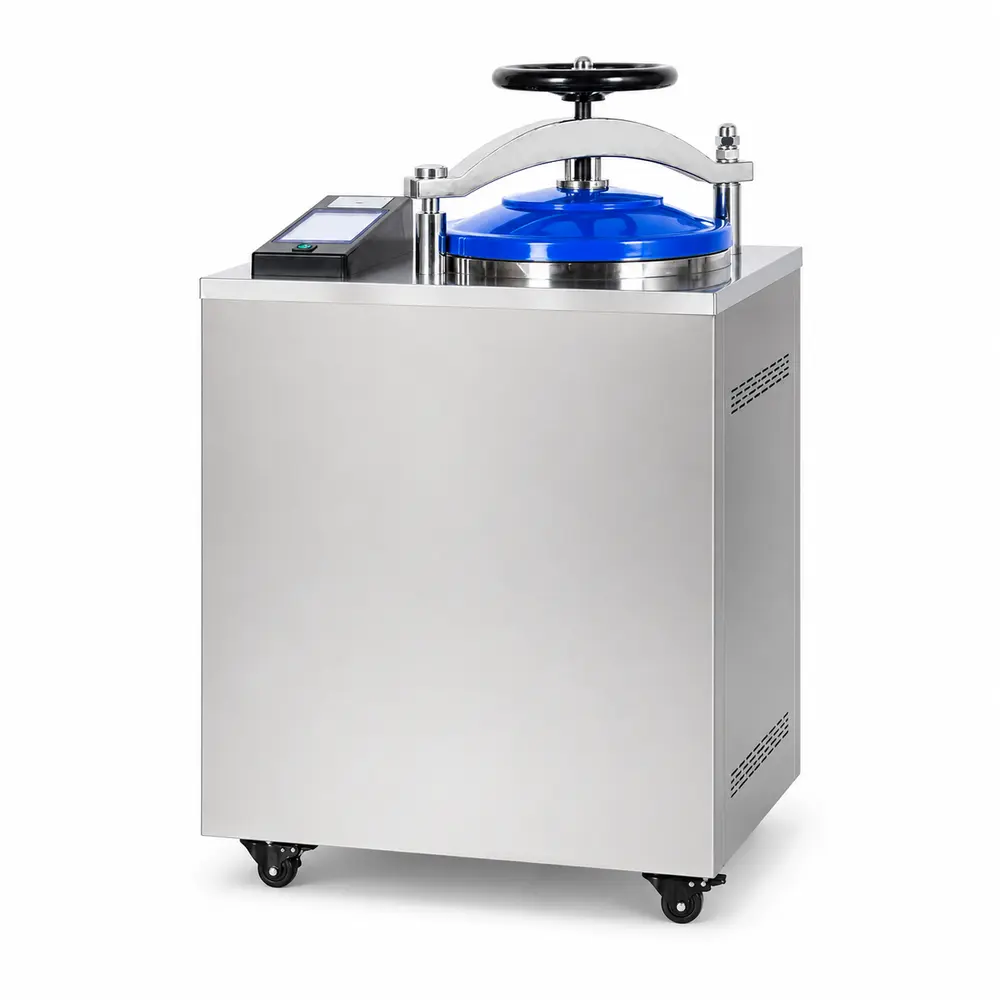
Equipment selection should match the department’s workflow. Buyers comparing Vertical Autoclaves should examine load types, chamber access, cycle controls, drying capability, monitoring functions, utilities and service support rather than comparing temperature settings alone.
| Application | Key cycle question | Typical verification focus |
|---|---|---|
| Wrapped instruments | Can air be removed and steam reach all surfaces? | Chemical indicators, biological indicators where required, pack dryness and routine records |
| Liquids | Can the load heat and cool without violent boiling or container failure? | Reference temperature, load probe studies, venting and cooling profile |
| Waste | Will the selected cycle penetrate the entire waste mass? | Load arrangement, container limits, cycle records and safe handling |
| Textiles | Will the porous load receive adequate steam contact and dry afterward? | Air removal, pack density, dryness and indicator response |
What F0 means in steam sterilization
F0 is an equivalent lethality value expressed as the number of minutes at 121.1 °C delivered to a load, commonly using a z-value of 10 °C. It converts a changing temperature profile into one comparable lethality figure. The calculation considers the complete temperature history, not only the programmed holding period.
For example, time spent below 121.1 °C contributes less than one equivalent minute per minute, while time above 121.1 °C contributes more. A simplified expression is F0 = integral of 10 raised to the power of (T − 121.1) divided by 10, with time accumulated across the relevant load-temperature profile.
F0 is useful for liquid cycles and other loads where the load temperature changes gradually. It should not be treated as a universal pass or fail number: the required target depends on the product, bioburden, container, organism resistance, process design and risk assessment. Accurate F0 work requires a suitable temperature sensor location and a validated calculation method.
- F0 is an equivalent lethality value, not simply the chamber setpoint.
- It can include lethality gained during heat-up and lost during cooling, depending on the calculation method.
- The target must be justified for the specific load and application.
Validation, monitoring and routine records
A cycle is acceptable only when the process consistently achieves the required result throughout the defined load. Validation normally considers temperature distribution, load temperature, pressure correlation, air removal, steam quality, packaging and drying. EN 285 addresses large steam sterilizers, while EN 13060 addresses small steam sterilizers; their applicability depends on the equipment category and intended use.
Routine monitoring should combine physical cycle records with chemical indicators and, where required by the risk assessment or local procedure, biological indicators. Packaging and barrier systems should be selected and evaluated in relation to the sterilization process; EN 868 is relevant to sterilization packaging materials and systems.
Operators should record the selected cycle, load description, identification number, date, operator, exposure data, indicator results and any deviations. If a cycle aborts, the load should be assessed under the facility’s nonconformance procedure rather than released because the displayed temperature briefly reached 121 °C or 134 °C.
Practical purchasing and operating questions
Before purchase, define the most difficult routine load rather than the easiest item. Ask whether the sterilizer supports the required liquid, porous, wrapped and waste cycles; how it manages air removal and drying; and whether its records can be reviewed and retained. Chamber size should be based on actual loading patterns, not only nominal internal volume.
Also review installation utilities, water quality requirements, ventilation, drainage, operator training, preventive maintenance and access to service documentation. A clear operating manual should explain cycle limits, loading rules, compatible materials, alarm responses and routine tests.
For application-specific questions, the autoclave FAQ can help structure an initial review. When a tender requires a load study, workflow assessment or documentation package, contact our export team with the load types, packaging, required throughput and destination-market requirements.
- Specify the load and packaging before specifying the temperature.
- Request cycle documentation and validation support appropriate to the application.
- Confirm that operators can distinguish exposure time from total cycle time.
Key points
- Temperature, pressure and holding time are linked, but steam contact and load temperature determine effective sterilization.
- A typical 134 °C exposure is shorter than a 121 °C exposure, but the complete cycle may not be shorter.
- Choose 121 °C or 134 °C according to material compatibility, load type, packaging and validated process requirements.
- F0 expresses equivalent lethality at 121.1 °C and is especially useful for evaluating changing liquid-load temperatures.
- Validation, monitoring, drying and complete records are essential before a processed load is released.
Frequently asked questions
Is 134 °C always faster than 121 °C?
The exposure phase is often shorter at 134 °C, but the complete cycle may not be. Heat-up, air removal, drying and cooling depend on the load and may add substantial time. A faster setting is suitable only when the load and validated process support it.
What pressure should an autoclave show at 121 °C or 134 °C?
For saturated steam near sea level, 121 °C corresponds approximately to 1 bar gauge and 134 °C to approximately 2 bar gauge. Readings vary with altitude, reference pressure, sensor accuracy and whether pressure is reported as gauge or absolute. Pressure should be interpreted together with temperature and the cycle record.
What cycle is normally used for liquids?
Liquids are commonly processed at 121 °C with a controlled heating, exposure, exhaust and cooling sequence. The correct holding time depends on liquid volume, container geometry, closure design and validated load temperature. Sealed containers and unsuitable materials can create serious pressure and breakage hazards.
Does F0 replace biological indicators?
No. F0 is a calculated lethality measure based on temperature history and an assumed resistance model. It supports process development and monitoring but does not by itself replace the facility’s required physical, chemical or biological controls.
Why can a wrapped load remain wet after sterilization?
Wet packs can result from inadequate drying, excessive loading, poor air removal, condensate, unsuitable packaging or an unsuitable cycle. Moisture may compromise the sterile barrier and should be investigated before release. Loading and packaging instructions should be followed and documented.
Discussing a specific project?
Send the load type, throughput and destination country. The export team replies with the models that fit and the documents you will need.
Contact the export teamSee Vertical Autoclaves