
Portable Autoclaves: Where They Fit and Where They Do Not
A portable autoclave is suitable for smaller, routine steam-sterilization loads when utilities, space or mobility are limited. It is not a substitute for a hospital CSSD sterilizer when workloads are large, loads are complex, drying is critical or detailed electronic records are required.
What a portable autoclave is designed to do
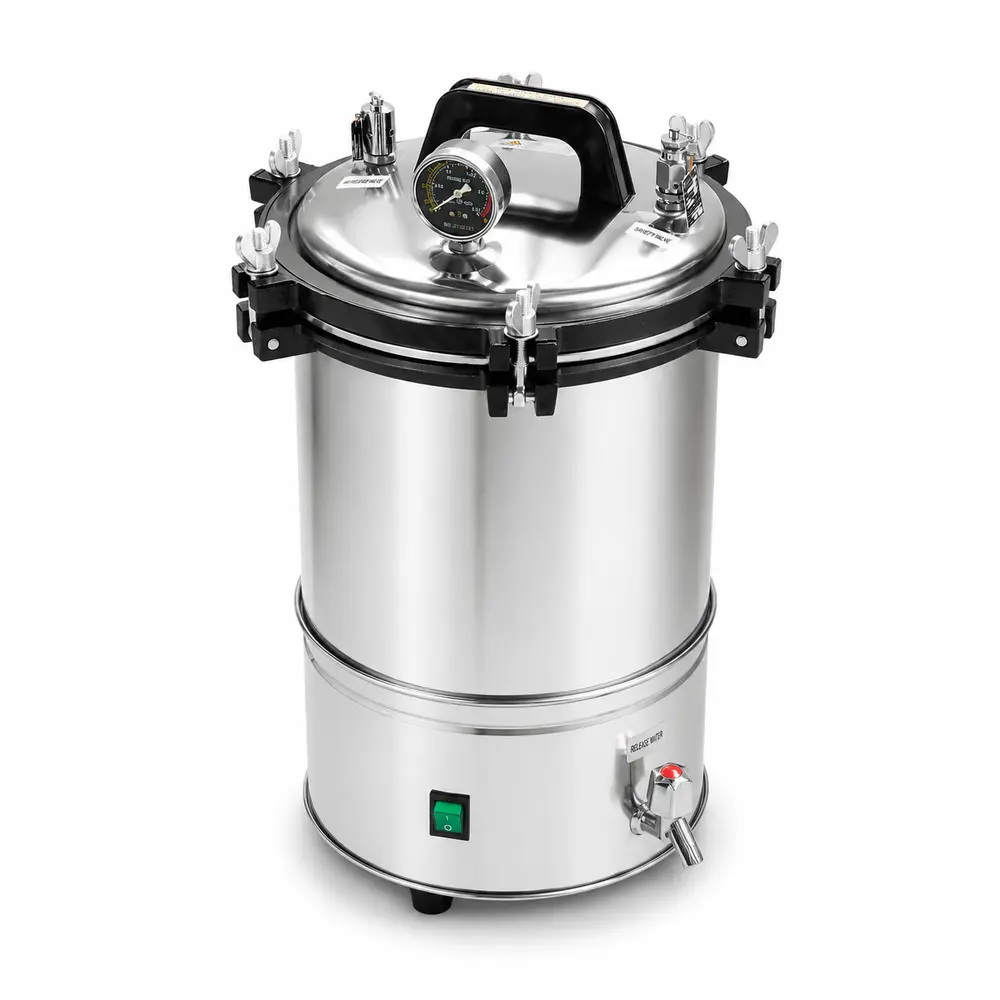
A portable autoclave is a compact pressure vessel that uses saturated steam to transfer heat to instruments, laboratory items or other compatible loads. Its main advantages are a small footprint, relatively simple installation and the ability to serve a local point of use, temporary work area, clinic, teaching laboratory or field setting.
The word portable describes the equipment format, not unrestricted mobility during operation. The unit still requires a stable, level location, suitable electrical or other heating service, water, ventilation and safe handling procedures. It must never be opened or moved while pressurized, and operators need training in loading, cycle selection, pressure release and post-cycle handling.
Capacity is only one part of suitability. The buyer should also assess the chamber opening, usable chamber volume, basket arrangement, heating recovery, cycle controls, safety devices, documentation and service support. A small chamber can be appropriate for frequent light loads but inefficient for a busy department that needs continuous processing.
- Best fit: low-volume, local and routine steam-sterilization work.
- Key limitation: compact equipment usually has less separation between loads and less automation than a central sterilization system.
- Operational requirement: use a written procedure covering loading, cycle release, cooling and records.
Where a portable autoclave fits in practice
Typical applications include basic laboratory glassware, metal instruments, heat-resistant accessories, certain unwrapped clinical instruments and compatible reusable items used close to the sterilizer. The load must be arranged so steam can contact all relevant surfaces. Containers should not be tightly closed, and liquid vessels need sufficient headspace and a controlled cooling procedure.
A portable unit can also support satellite treatment rooms, small dental or medical practices, veterinary work, educational laboratories and emergency or mobile operations. The correct application depends on the validated cycle, the item manufacturer’s instructions and the organization’s infection-control or laboratory quality system.
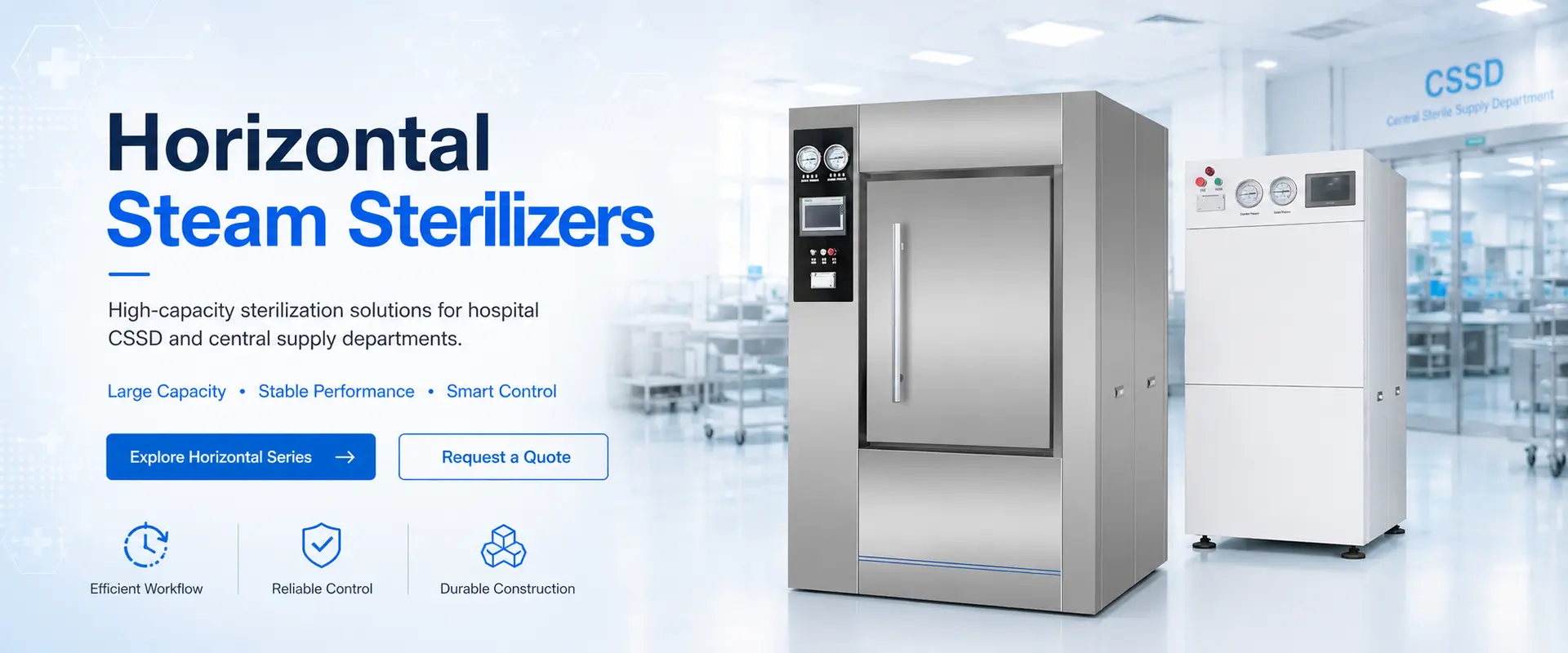
For central processing, a horizontal sterilizer with higher loading capacity, improved air removal, dedicated drying and stronger record functions is normally more appropriate. A portable unit may supplement that workflow, but it should not be selected merely because its purchase footprint is smaller.
| Application | Potential fit | Main condition |
|---|---|---|
| Small clinic or dental room | Routine compatible instruments | Load size and packaging must match the cycle |
| Teaching or research laboratory | Glassware and selected heat-resistant items | Liquids and biological materials require defined procedures |
| Hospital CSSD | Supplementary or low-volume work | Not a replacement for central high-throughput processing |
| Field or temporary site | Local treatment of simple compatible loads | Water, power, safety and operator training must be reliable |
Load types a portable autoclave should not handle casually
Steam sterilization is not suitable for every material. Oils, powders, many solvents, flammable chemicals, sealed containers and materials that react with heat or moisture should not be placed in a steam pressure sterilizer unless a documented, application-specific process has established safe handling. Electrical equipment, corrosion-sensitive metals, sharp assemblies and complex devices also require careful compatibility review.
Sealed liquid containers create particular risk because pressure and temperature changes can cause rupture or delayed boiling. Waste and microbiological materials may require containment, special loading procedures and a validated cycle. A portable autoclave should not be used for these loads simply because the chamber can reach a high temperature or pressure.
Wrapped and porous loads may be technically processable only when air removal, steam penetration, drying and packaging controls are adequate. If the unit cannot reliably remove air or dry the load, the user should select a simpler compatible load or use a sterilizer designed for wrapped and porous instruments.
| Load characteristic | Question to ask | Typical decision |
|---|---|---|
| Moisture and heat sensitive | Can the item manufacturer permit saturated steam exposure? | Reject or use another validated method if not permitted |
| Closed or sealed | Can pressure equalize safely during heating and cooling? | Do not process unless an approved procedure addresses it |
| Porous, wrapped or hollow | Can air removal and steam penetration be demonstrated? | Use only with a suitable cycle and process controls |
| Liquid or biological material | Are volume, vessel type, containment and cooling defined? | Follow a written risk-controlled procedure |
Throughput: the practical limit is more than chamber volume
A compact chamber may appear adequate when measured by internal volume, but usable throughput depends on baskets, clearance around each item, load density, heating recovery and unloading time. Overloading can block steam contact, prolong the cycle and produce an unacceptable result. Underloading is safer than crowding, but it may reduce productivity when many small batches are required.
Cycle time includes preparation, loading, air removal or displacement, exposure, exhaust, cooling, drying where available and documentation. Liquid loads often need longer cooling before safe removal. A department should therefore calculate complete batch time rather than comparing only the advertised exposure period.
For routine demand planning, record the number and type of loads per day, peak demand, acceptable waiting time and whether a second sterilizer or backup process is needed. If the answer requires near-continuous operation, frequent wrapped loads or several operators working around the chamber, a larger departmental system is usually the more practical choice.
- Measure useful load capacity, not only chamber dimensions.
- Include cooling, drying, cleaning and record completion in the cycle-time calculation.
- Leave capacity for correct steam circulation instead of designing around maximum physical filling.
Drying, packaging and the portable autoclave decision
Drying is a common limitation of small pressure sterilizers. Some compact units provide limited drying or rely on natural cooling and evaporation after exhaust. Wet packs or wet instruments can become contaminated during handling and storage, and residual moisture can accelerate corrosion. Where dry, wrapped instruments are required immediately after the cycle, the buyer should verify the drying method rather than assume that sterilization and drying are equivalent.
Packaging also affects performance. Steam must reach the load, air must leave the package and moisture must escape. Packaging materials should be intended for steam sterilization and evaluated for compatibility; EN 868 provides a relevant framework for packaging materials and systems. A portable autoclave may be well suited to unwrapped point-of-use work but less suitable for storage-ready wrapped sets.
A pre-vacuum system typically offers stronger air removal and more controlled processing of porous or wrapped loads than a basic gravity-displacement design. This does not make every pre-vacuum cycle suitable for every item: cycle selection, loading, packaging and validation remain essential.
| Load presentation | Main requirement | Portable-unit concern |
|---|---|---|
| Unwrapped metal items | Steam contact and aseptic transfer | Limited storage time after processing |
| Wrapped instruments | Air removal, penetration and drying | Wet packs or incomplete drying may limit use |
| Glassware | Open arrangement and controlled cooling | Breakage and delayed boiling must be managed |
| Liquids | Suitable vessels, headspace and slow cooling | Longer total cycle and handling time |
Controls, monitoring and record keeping
A portable autoclave may use manual controls, simple automatic control or more advanced cycle management. The buyer should identify what the operator can set, what the unit displays, whether a cycle can be interrupted safely and how faults are indicated. Safety functions should address overpressure, excessive temperature, door or lid status and abnormal operating conditions.
Record keeping is often more limited than in a hospital CSSD system. A basic unit may provide only visual indications or a manual log, while a more advanced configuration may store cycle parameters or connect to a printer or data system. Tender documents should state the required record fields, retention period, user identification, audit trail and method for linking a cycle to a load.
EN ISO 17665 describes a quality-system approach to the development, validation and routine control of moist-heat sterilization processes. EN 285 and EN 13060 address different categories of steam sterilizer requirements in general; the relevant standard depends on equipment type and intended use. The purchaser should ask how the proposed system supports local procedures and required evidence, without treating a standard number alone as proof of suitability.
- Define the minimum record: date, operator, load description, cycle, critical parameters and release decision.
- Use physical, chemical and, where appropriate, biological monitoring within the organization’s risk-based procedure.
- Keep maintenance, cleaning, fault and corrective-action records with cycle documentation.
A practical buying checklist for a portable autoclave
Start with the load rather than the equipment label. Describe the instruments, packaging, liquids, hollow items, daily quantity and peak workload. Then confirm chamber access, basket handling, utility requirements, heat-up and cooling behavior, drying performance, control method, safety features and the availability of operating instructions and maintenance information.
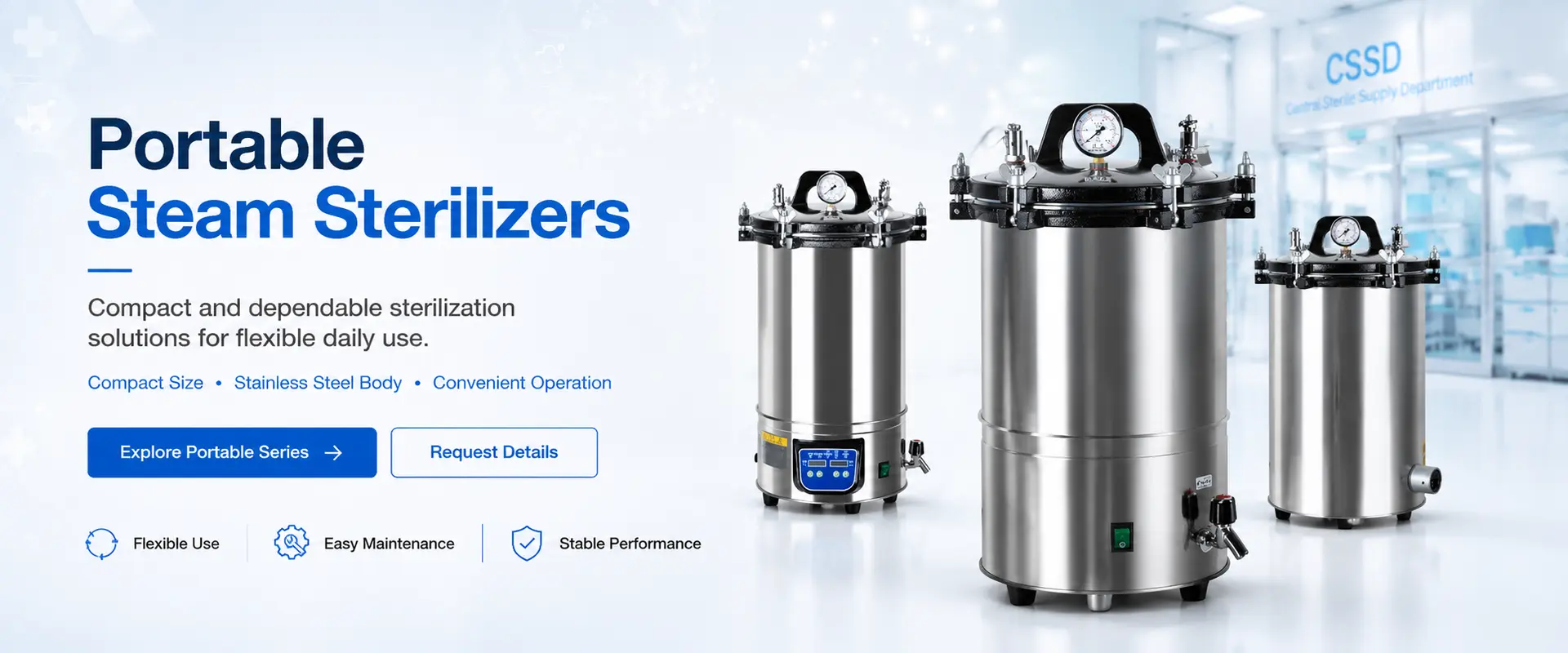
The Portable Autoclaves product category can help buyers review the equipment format before preparing a technical inquiry. For questions about cycle selection, compatible loads or operating practice, consult the autoclave FAQ and compare the answers with your infection-control, laboratory or quality-system requirements.
For distributor, tender and export projects, provide the intended country, application, load description, power conditions, documentation needs and service expectations. This gives our export team enough context to discuss an appropriate configuration without treating a compact sterilizer as a universal solution.
| Topic | Information to provide | Why it matters |
|---|---|---|
| Application | Clinic, laboratory, dental, field or CSSD use | Determines process complexity and workflow needs |
| Load | Item types, packaging, liquids and daily quantity | Confirms compatibility and realistic throughput |
| Utilities | Power supply, water quality, drainage and ventilation | Prevents installation and operating problems |
| Documentation | Logs, printouts, manuals, validation support and training | Defines evidence needed for release and audits |
Key points
- A portable autoclave is best for smaller, local steam-sterilization workloads with simple, compatible loads.
- Do not assume that pressure and heat make oils, powders, solvents, sealed containers or complex devices suitable for steam processing.
- Throughput depends on complete batch time, loading discipline, cooling, drying and documentation.
- Drying and record keeping are often the main practical limits compared with larger departmental sterilizers.
- Choose the equipment from the intended load and workflow, then confirm standards, monitoring, training and service requirements.
Frequently asked questions
Is a portable autoclave suitable for a hospital CSSD?
It can be suitable for supplementary, low-volume or local work involving compatible loads. It is generally not the best choice for a busy CSSD that needs high throughput, extensive drying, complex load processing and integrated traceability.
Can a portable autoclave sterilize wrapped instruments?
Only if the equipment, cycle, packaging and loading method support adequate air removal, steam penetration and drying. If these controls are limited, use unwrapped compatible loads or select equipment designed for wrapped instruments.
Can sealed bottles or containers be processed?
Sealed containers can create dangerous pressure differences and may rupture or boil over during cooling. They should not be processed unless a documented procedure specifically defines suitable vessels, filling limits, cycle conditions and safe cooling.
How should throughput be compared between models?
Compare usable load capacity and complete batch time, not chamber volume or exposure time alone. Include loading, heating, exposure, exhaust, cooling, drying, unloading and documentation.
What records should a small sterilizer maintain?
At minimum, retain the date, operator, load description, selected cycle, critical process information and release decision. Depending on the risk and local requirements, add chemical or biological monitoring results, maintenance history and a traceable electronic or printed cycle record.
Discussing a specific project?
Send the load type, throughput and destination country. The export team replies with the models that fit and the documents you will need.
Contact the export teamSee Portable Autoclaves