
Autoclave Maintenance and Spare Parts Planning
Autoclave maintenance should be planned across the equipment life, not arranged only after a failure. A practical ten-year plan combines daily operator checks, scheduled inspections, replacement of predictable wear parts, local stock of critical items, and a service agreement defined before purchase.
Why autoclave maintenance belongs in the purchasing decision
A steam sterilizer is a pressure vessel, heating system, control system, water and drainage assembly, and user interface in one piece of equipment. Its reliability therefore depends on more than the chamber and generator. Door sealing, air removal, condensate discharge, filtration, safety controls, sensors, documentation, and cleaning all affect safe and repeatable operation.
During tendering, request a maintenance concept as well as a technical offer. The concept should identify preventive tasks, recommended intervals, responsible personnel, required tools, training, spare-part identification, remote support, escalation for breakdowns, and the records that will be supplied after service. This approach makes lifecycle cost and operational risk visible before installation.
For an overview of equipment categories and application considerations, buyers can review Vertical Autoclaves. The appropriate format depends on workload, load type, available utilities, installation space, and the level of documentation required by the facility.
- Ask for a maintenance schedule linked to operating hours and cycle count where applicable.
- Confirm which tasks can be performed by trained operators and which require qualified service personnel.
- Require clear part numbers, exploded drawings, wiring information, and troubleshooting guidance.
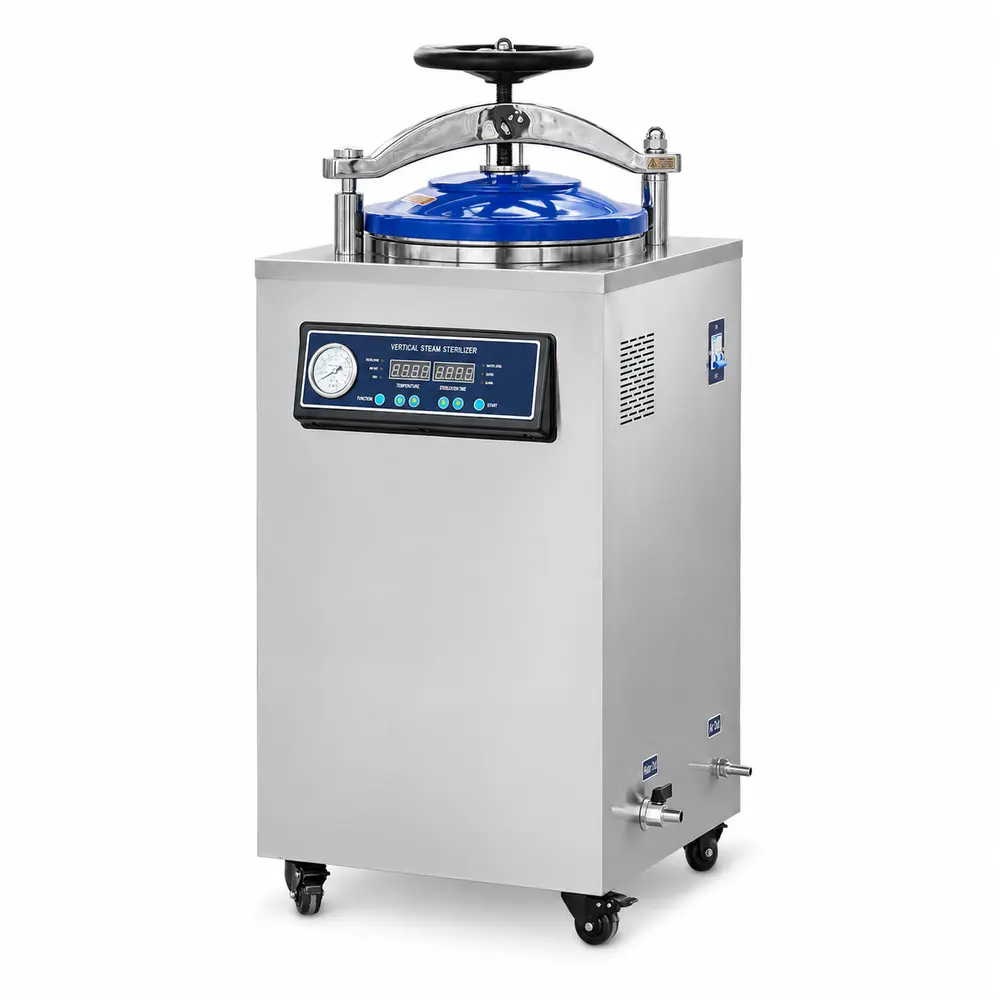
The ten-year autoclave maintenance calendar
The calendar below is a planning framework, not a replacement for the equipment manual, risk assessment, or local pressure-equipment rules. Actual intervals should be adjusted for water quality, cycle frequency, load conditions, cleaning practices, and the manufacturer’s instructions.
Every inspection should produce a record showing the date, cycle count or operating hours where available, findings, parts changed, corrective action, and the person who completed the work. Trend records are valuable: a slowly increasing heating time, repeated leakage, unstable temperature readings, or frequent filter blockage can indicate a developing problem.
| Period | Typical maintenance focus | Planning evidence |
|---|---|---|
| Every day or operating shift | Check chamber, door sealing surfaces, drains, display messages, water condition, and visible leaks; clean as instructed. | Operator checklist and cycle record |
| Weekly to monthly | Inspect the door gasket, strainers, filters, printer supplies, tubing, fittings, and condensate discharge; review alarms and cycle trends. | Supervisor review and consumables log |
| Every 3 to 12 months | Service frequency-dependent items, verify sensors and controls as required, inspect safety-related components, and clean or replace filters and traps according to condition. | Preventive service report |
| Years 2 to 3 | Review recurring wear, water quality, chamber condition, electrical connections, valves, pumps, and availability of replacement parts. | Lifecycle review and updated stock list |
| Years 4 to 6 | Assess aging controls, door hardware, heating and drainage components, documentation, and the suitability of the service agreement. | Mid-life condition assessment |
| Years 7 to 10 | Plan major refurbishment or replacement risks, confirm software and control-board support, inspect pressure-related components under applicable rules, and budget for end-of-life items. | Renewal decision and contingency plan |
Which wear parts actually fail?
Wear is not identical across all installations. A heavily used CSSD unit, a laboratory sterilizer with demanding water conditions, and a dental-clinic unit may experience different failure patterns. Nevertheless, several parts deserve particular attention because they are exposed to heat, pressure changes, moisture, chemicals, movement, or repeated cleaning.
The door gasket is a common source of leakage and cycle interruption. Filters and strainers collect particles and scale; traps and condensate components can become restricted or fail to discharge correctly. Safety valves are safety-critical devices and must be inspected, tested, and replaced only under an approved procedure. Printer mechanisms and paper are operationally less critical, but loss of records can create a serious documentation problem.
Do not treat every component as a routine user-replaceable part. Before authorizing work, identify whether the task affects pressure containment, electrical safety, calibration, interlocks, or validated process performance. Those tasks should be assigned to trained and authorized personnel.
| Part or assembly | Typical symptom | Maintenance response |
|---|---|---|
| Door gasket and sealing surface | Steam or water leakage, difficulty closing, repeated door alarms | Clean and inspect routinely; replace when damaged, hardened, permanently deformed, or unable to seal |
| Water, air, or steam filters and strainers | Slow filling, poor drainage, unstable pressure, or repeated blockage | Inspect for contamination and scale; clean or replace according to the service procedure |
| Steam traps and condensate components | Wet loads, slow cycle progress, abnormal drainage, or temperature inconsistency | Check discharge path and trap operation; replace defective parts with the correct specification |
| Safety valve | Leakage, failure during an authorized safety check, or an inspection interval becoming due | Use a qualified service procedure and applicable legal requirements; never bypass or adjust casually |
| Printer, paper, and cutter mechanism | Faded records, paper feed errors, unreadable labels, or loss of printout | Stock consumables and replace the mechanism when repair is no longer reliable |
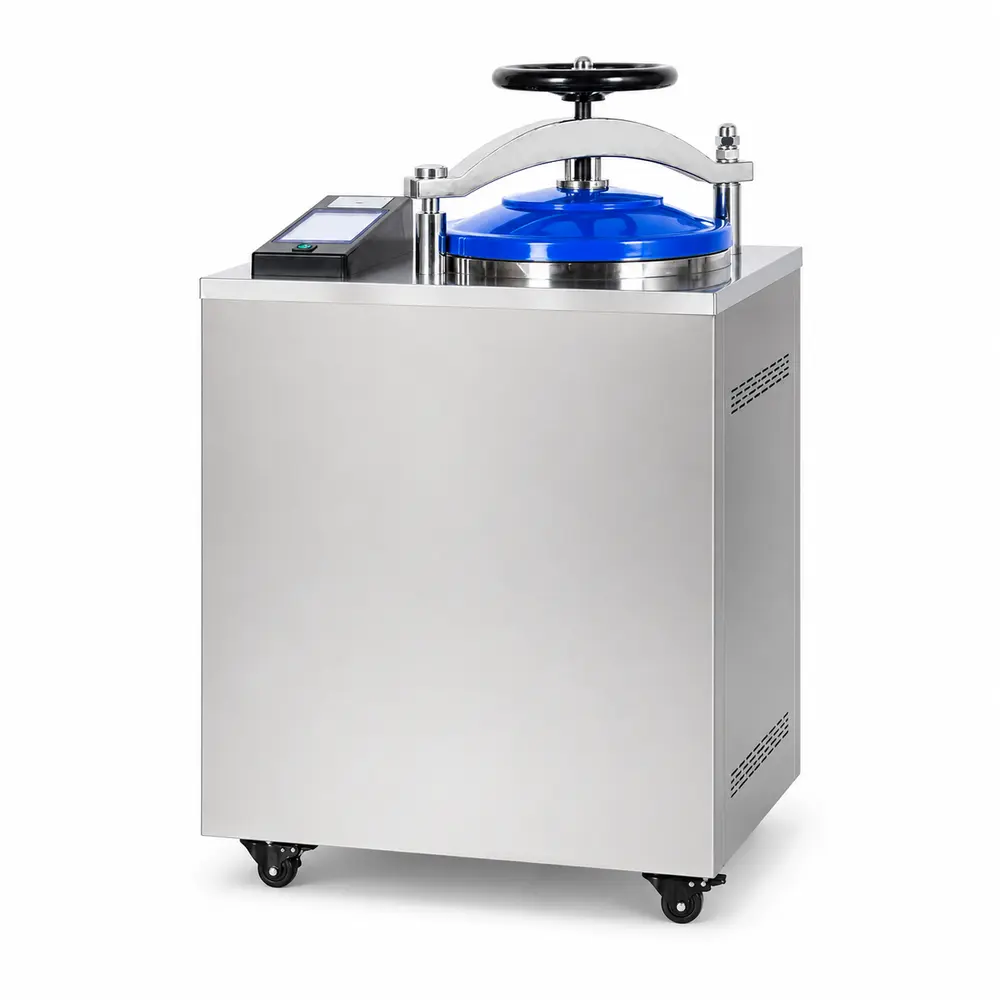
What to stock locally for fast recovery
Local stock should be based on consequence, lead-time risk, common failure, and storage life. A hospital or laboratory does not need every internal component on the shelf, but it should avoid making a sterilizer unavailable because of a low-cost seal, filter, fuse, paper roll, or connector.
Keep parts identified by equipment serial number, revision, and approved part reference. Store elastomers away from heat, light, ozone, oils, and compression. Protect electronic boards from moisture and static electricity, and rotate paper and other consumables so that old stock is used first.
- Routine consumables: door gaskets, filter elements, strainers, printer paper, labels where used, fuses, and approved cleaning materials.
- Operational spares: selected sensors, switches, tubing, clamps, connectors, door hardware, and drain or trap service kits, based on the equipment configuration.
- Critical contingency items: safety-related parts and control components where downtime would be unacceptable and qualified installation support is available.
- Documentation stock: maintenance forms, cycle-record paper, service labels, calibration records, and current wiring or parts documentation.
How to write service into the autoclave purchase
A service package should define more than a response telephone number. Include commissioning, operator training, preventive-maintenance visits, inspection scope, service reporting, spare-part identification, software or control-system support, and the process for technical escalation. For multi-site users, specify how service history and replacement-part compatibility will be controlled across the installed base.
The purchase specification should also state what the supplier must provide at handover: manuals, maintenance intervals, cleaning instructions, pressure and electrical safety information, parts lists, recommended tools, fault-code explanations, and training records. Ask how changes to components or control software will be communicated and documented.
Use our export team to discuss the information needed for a project-specific service and spare-parts plan. Buyers should compare the clarity and completeness of the support package, not only the initial equipment description.
| Contract element | What to define | Why it matters |
|---|---|---|
| Commissioning | Installation checks, utility verification, operator orientation, and handover documents | Establishes a controlled starting condition |
| Preventive maintenance | Tasks, intervals, inspection methods, reporting, and exclusions | Prevents uncertainty about what is included |
| Spare parts | Approved part references, stock recommendations, obsolescence notice, and ordering process | Reduces downtime and substitution risk |
| Training | Operator checks, cleaning, fault reporting, and service boundaries | Improves safe use and early fault detection |
| Breakdown support | Contact route, diagnostic information, escalation, and site-service responsibilities | Creates a defined response process without relying on informal contacts |
| Records and review | Service reports, replaced-part history, open actions, and periodic performance review | Supports audits, budgeting, and lifecycle decisions |

Maintenance controls for different operating environments
A CSSD typically requires disciplined scheduling, traceable records, and coordination with production demand. A laboratory may have less frequent use but more variation in loads and water quality. Dental and clinic users often need compact local stock and simple operator checks because a small team may cover both sterilization and clinical work.
Load design also influences maintenance. Liquids, porous goods, hollow instruments, wrapped loads, and unwrapped items place different demands on air removal, drying, drainage, and monitoring. The selected cycle must be suitable for the load, while cleaning and inspection routines should reflect the contamination and residue expected in that application.
Where process quality is governed by a formal quality system, align maintenance records with the site’s release and deviation procedures. EN 285, EN 13060, EN ISO 17665, and EN 868 address different aspects of steam sterilization equipment, process validation, and packaging; users should determine which requirements apply to their equipment and intended loads.
Using records to prevent avoidable downtime
A useful maintenance dashboard combines cycle count, operating hours, alarms, leakage reports, failed checks, replacement history, water-quality findings, and service costs. Review the information monthly or quarterly. Repeated small faults often justify planned intervention before they become a shutdown.
Set clear triggers for action. Examples include recurring door-seal leakage, a filter that blocks sooner than expected, a trap that repeatedly causes wet loads, a safety inspection approaching its legal deadline, or a printer that fails during every documentation-heavy shift. The trigger should create a work order, not merely a note in an operator log.
An autoclave FAQ can help users locate general operating and support information, but site personnel should always follow the applicable equipment manual and local procedures. Never defeat a door interlock, safety device, pressure protection component, or alarm simply to keep production running.
- Assign one owner for the maintenance calendar and one backup person.
- Keep a minimum and maximum quantity for each stocked part.
- Review obsolete or unused parts at least annually.
- Record the reason for every replacement, not only the part name.
- Link maintenance findings to cycle release, deviation, and risk-management procedures.
Key points
- Plan autoclave maintenance across the full ten-year lifecycle, with tasks assigned by frequency and competence.
- Prioritize door gaskets, filters, traps, safety valves, and printer systems because they commonly affect availability or records.
- Keep low-cost, high-consequence wear parts locally and identify every item by the installed equipment configuration.
- Make training, documentation, preventive service, spare parts, and breakdown support part of the purchase specification.
- Use maintenance and alarm trends to schedule corrective work before a minor fault becomes prolonged downtime.
Frequently asked questions
How often should an autoclave receive preventive maintenance?
There is no single interval suitable for every installation. Use the equipment instructions, operating intensity, water quality, cycle type, local pressure rules, and risk assessment to set the schedule. Daily operator checks and periodic qualified servicing should both be included.
Which autoclave spare parts should be kept on site?
Common local stock includes door gaskets, filters or strainers, printer supplies, fuses, approved cleaning materials, and selected tubing or connectors. The final list should be based on the installed configuration, usage volume, downtime consequence, and supplier support arrangements.
Can operators replace a door gasket themselves?
That depends on the equipment instructions and the organization’s authorization system. Operators may perform simple tasks only when trained and permitted; after replacement, the door seal and relevant safety or process checks must be completed according to the approved procedure.
Is a safety valve a normal consumable?
It is a safety-critical component, not an ordinary consumable. Inspection, testing, adjustment, and replacement must follow the applicable pressure-equipment requirements and be performed by qualified personnel using the correct part and documented procedure.
What should be included in a service agreement?
Define commissioning, training, preventive-maintenance scope, service reports, spare-part references, technical escalation, documentation updates, and support for aging components. Also state who is responsible for utilities, validation-related work, calibration, travel, and emergency intervention.
Discussing a specific project?
Send the load type, throughput and destination country. The export team replies with the models that fit and the documents you will need.
Contact the export teamSee Vertical Autoclaves