
Feed Water Quality for Steam Sterilizers: Why It Decides Chamber Life
Autoclave water quality directly affects the service life of the chamber, steam generator and instrument loads. For systems designed around EN 285 principles, feed water and condensate must remain within defined chemical limits; exceeding them can cause corrosion, scale, deposits, wet steam and repeated maintenance.
Why autoclave water quality decides chamber life
A steam sterilizer converts treated water into process steam, exposes the chamber and load to that steam, and then removes condensate through the drainage system. Any dissolved salts, metals, silica or aggressive ions in the water can therefore travel through several critical parts of the machine. The effect is cumulative: a small daily load of contaminants can become a significant deposit after months of operation.
The chamber is usually manufactured from corrosion-resistant stainless steel, but stainless steel is not immune to poor water chemistry. Chlorides can support localized pitting, while hard-water minerals can form scale on heated surfaces and valves. Deposits may also interfere with sensors, filters, steam traps and door sealing surfaces, increasing maintenance needs and making cleaning more difficult.
- Poor water can shorten the working life of heated generator surfaces.
- Mineral deposits can restrict valves, pipes, filters and drains.
- Corrosion products may stain instruments and contaminate condensate.
- Unstable water chemistry can contribute to wet or non-condensable-gas-contaminated steam.
EN 285 feed water and condensate limits
EN 285 gives widely used requirements for large steam sterilizers and includes quality limits for feed water used to generate steam, together with limits for condensate collected from the steam. The values below are commonly referenced when planning a hospital or central sterilization installation. The current standard edition, the sterilizer design, and local water regulations should always be checked before finalizing a treatment system.
Feed water and condensate are not interchangeable terms. Feed water enters the generator or steam supply system; condensate is collected after steam has passed through the sterilizer system. Condensate limits are generally tighter for several contaminants because they help indicate the quality of the steam reaching the chamber and load.
| Parameter | Feed water limit commonly referenced | Condensate limit commonly referenced |
|---|---|---|
| Appearance | Colourless, clear, with no visible sediment | Colourless, clear, with no visible sediment |
| Conductivity | Not more than 5 micrometres per centimetre at 20 degrees C | Not more than 3 micrometres per centimetre at 20 degrees C |
| pH value | Approximately 5.0 to 7.5 | Approximately 5.0 to 7.5 |
| Total hardness | Not more than 0.02 millimoles per litre | Not more than 0.02 millimoles per litre |
| Chloride | Not more than 2 milligrams per litre | Not more than 0.1 milligrams per litre |
| Silicate, expressed as silicon | Not more than 1 milligram per litre | Not more than 0.1 milligrams per litre |
| Iron | Not more than 0.2 milligrams per litre | Not more than 0.1 milligrams per litre |
What excess minerals do to the generator and chamber
Hardness-forming calcium and magnesium can produce scale on generator heating surfaces. Scale acts as an insulating layer, so the system may need more energy and longer heating to produce steam. Thick deposits can create local hot spots, reduce heat transfer and increase the risk of premature heating-element or generator maintenance.
Chloride is particularly important because it can promote pitting and crevice corrosion in stainless steel when concentration, temperature and surface conditions are unfavorable. Silica can form difficult-to-remove glass-like deposits, while iron and copper can create coloured stains and particulate contamination. A water analysis that reports only hardness is therefore incomplete; conductivity, chloride, silica and metals also matter.
| Water-quality problem | Likely equipment effect | Possible operational symptom |
|---|---|---|
| High hardness | Scale on heating surfaces, valves and pipework | Slower heating, higher energy demand or reduced steam output |
| High chloride | Pitting or crevice corrosion of stainless-steel surfaces | Rust-like spots, leaks or shortened component life |
| High silica | Hard deposits on generator and steam-path components | Difficult cleaning and restricted flow |
| High conductivity or dissolved solids | Mineral deposits and increased carryover risk | Unstable steam quality or residue on chamber surfaces |
| Low or high pH | Increased corrosion risk or incompatibility with materials | Surface staining, premature seal or component deterioration |
How poor water affects instruments and sterilization performance
Water contaminants do not remain inside the generator. Steam condenses on instruments, trays, packaging and chamber surfaces, so dissolved substances may be left behind as spots or films. These residues can affect the appearance of stainless-steel instruments, obstruct narrow lumens, reduce the function of hinges and create additional work for CSSD staff.
Poor water quality can also affect process reliability. Deposits on temperature or pressure sensors may influence measurement stability, while blocked filters, steam traps or drains can contribute to slow air removal, inadequate drying or abnormal cycle alarms. Water quality alone does not determine sterilization performance, but it is an important supporting condition alongside correct loading, air removal, exposure control, drying and routine process monitoring.
- Visible spotting is a warning sign, not merely a cosmetic issue.
- Residue on instruments may undermine cleaning inspection and corrosion control.
- Steam quality should be considered together with non-condensable gases, dryness and superheat.
- Process records and maintenance findings should be reviewed alongside water test results.
Choosing treatment for the required autoclave water quality
The correct treatment train depends on the incoming water analysis, sterilizer design, daily water consumption and the quality required at the point of use. A buyer should not select treatment only by looking at the municipal water hardness. Chloride, silica, conductivity, iron, organic contamination and seasonal changes can all influence the solution.
Common treatment stages include sediment filtration, activated carbon, softening, reverse osmosis and final deionization or polishing. A storage tank, circulation loop, ultraviolet stage or final membrane filter may also be appropriate for a larger installation. The treatment system should be designed as part of the sterilizer project, not added after repeated deposits or corrosion have already appeared.
Reverse osmosis can reduce many dissolved salts, but it does not automatically provide a complete solution for every contaminant or every installation. Softened water may reduce hardness while leaving conductivity and chloride too high. Final polishing may be needed where the required conductivity or silica level is stringent.
| Treatment stage | Main purpose | Buyer should check |
|---|---|---|
| Sediment filtration | Remove suspended particles and protect downstream equipment | Filter rating, replacement interval and pressure loss |
| Activated carbon | Reduce chlorine and some organic contaminants | Carbon capacity, bacterial-control plan and replacement schedule |
| Water softening | Reduce calcium and magnesium hardness | Salt use, regeneration discharge and residual conductivity |
| Reverse osmosis | Reduce dissolved salts, metals and many other contaminants | Recovery rate, pretreatment, membrane fouling and reject-water disposal |
| Deionization or polishing | Further reduce ionic contaminants and conductivity | Resin capacity, exhaustion monitoring and hygienic operation |
| Final filtration or storage | Control particles and protect point-of-use quality | Tank hygiene, dead legs, circulation and filter replacement |
What a buyer should budget alongside the sterilizer
The water-treatment budget should include more than the initial filter housings and membranes. Allow for a raw-water laboratory analysis, treatment design, installation, pipework, drains, electrical supplies, storage, monitoring instruments and commissioning. If several sterilizers are installed, calculate peak demand and not only average daily consumption.
Operating costs include replacement cartridges, softener salt, membrane cleaning, deionization resin, sanitization, electricity, reject water and technician time. A treatment system that is inexpensive to purchase may become costly if it has a short consumable life or requires frequent manual intervention. Buyers should request a clear consumables schedule and an estimate based on the actual local water report.
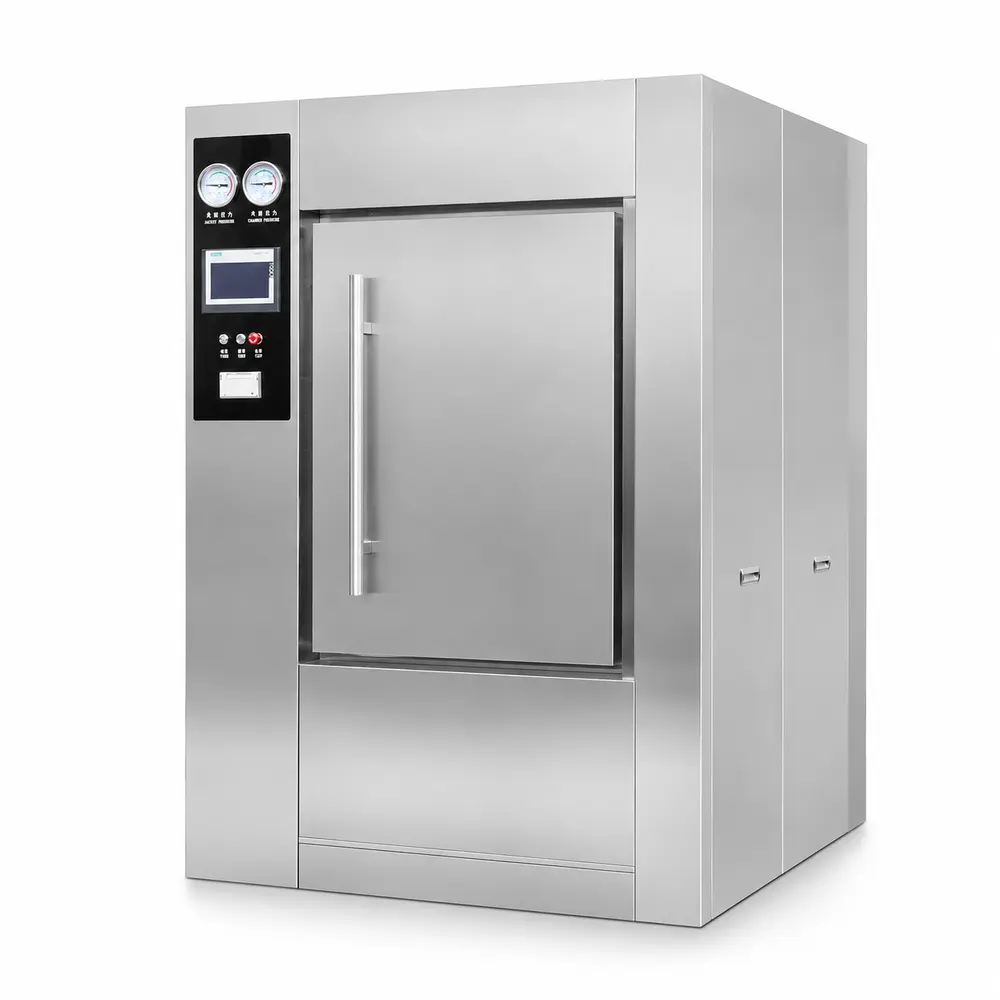
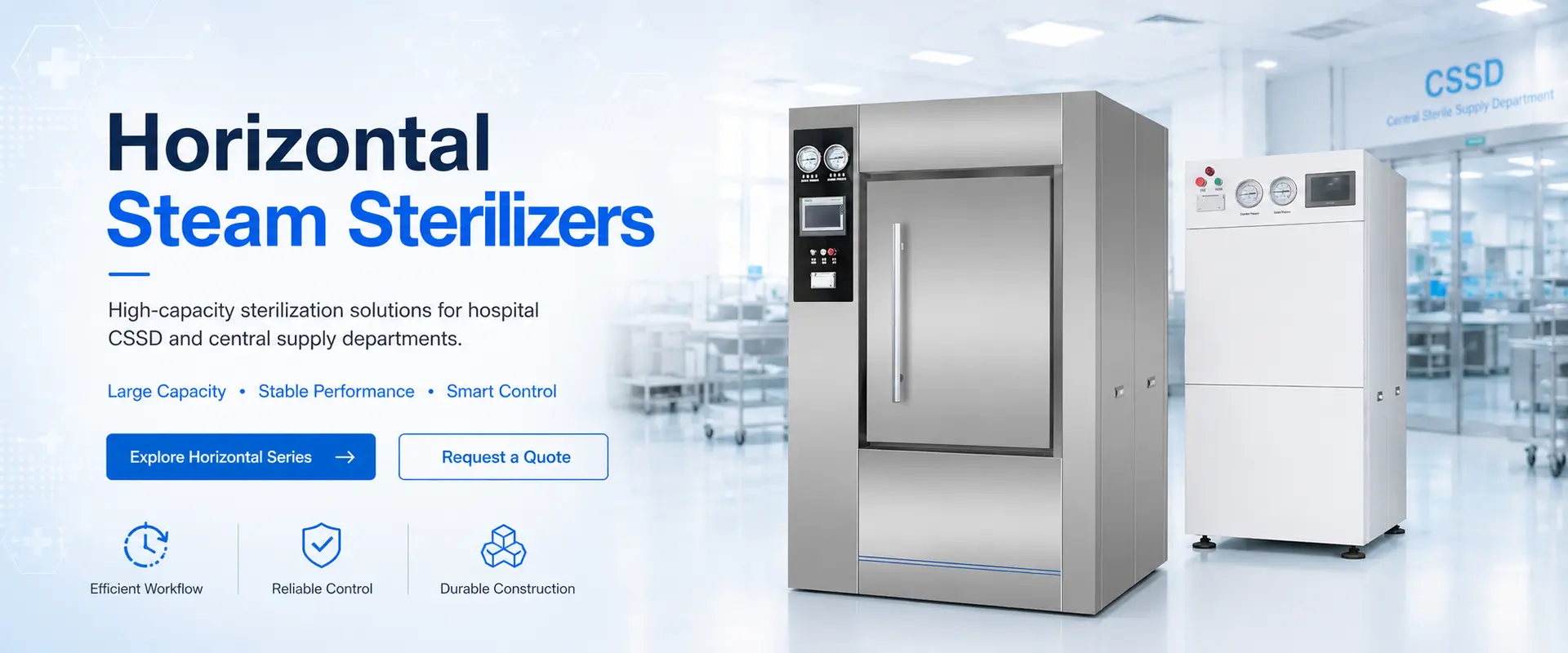
For equipment selection, review the available Horizontal Autoclaves and ask how the proposed installation manages feed water, drainage, maintenance access and water-quality monitoring. The sterilizer supplier and the water-treatment contractor should agree on the required point-of-use limits in writing.
- Raw-water analysis and repeat testing
- Pretreatment, membranes, resin and final filters
- Storage tank, circulation and hygienic pipework
- Conductivity and, where needed, silica or chloride monitoring
- Drainage, reject-water handling and service access
- Consumables, sanitation and planned replacement labour
Testing, records and maintenance controls
Test the incoming water before purchase and test treated water at the point where it enters the sterilizer. Conductivity is useful for routine trending, but it cannot identify every contaminant; a low conductivity result does not by itself prove that chloride, silica, hardness or biological conditions are acceptable. Use a qualified laboratory or validated field methods suited to the parameters being checked.
Record results with the sterilizer cycle and maintenance history. A gradual rise in conductivity, increasing chamber spotting, repeated drain restrictions or a change in generator heating time can indicate treatment exhaustion. Establish action limits, identify who replaces consumables, and define what happens if the water is outside specification.
EN ISO 17665 addresses the development, validation and routine control of moist-heat sterilization processes, while EN 868 concerns packaging materials and systems. Water quality supports these processes but does not replace routine sterilizer monitoring, load control, preventive maintenance or the site's quality-management procedures.
| Control point | Recommended question | Useful record |
|---|---|---|
| Before procurement | What are the source-water values for hardness, chloride, silica, iron and conductivity? | Recent laboratory water report |
| Treatment design | Can the system meet the required limits at peak flow and after consumable exhaustion alarms? | Treatment schematic and capacity calculation |
| Point of use | Is treated water tested at the sterilizer inlet rather than only at the treatment outlet? | Routine test log |
| During operation | Are trends in deposits, alarms, heating time and drying reviewed? | Maintenance and cycle-trend records |
| After intervention | Was the water retested after filter, membrane, resin or plumbing work? | Post-maintenance verification record |
A procurement decision that protects long-term value
A sterilizer should be evaluated together with the water available at its installation site. Ask for the required feed-water quality, sampling points, acceptable monitoring methods, treatment interfaces, drain requirements and maintenance responsibilities. Where the local supply is variable, specify a treatment system with capacity margin and clear alarms rather than relying on occasional visual inspection.
The final project documents should identify which party supplies each component, who validates the treated-water performance and who pays for consumables and service. This avoids a common gap in responsibility between the sterilizer supplier, building services contractor and water-treatment vendor. For application questions, consult the autoclave FAQ and provide the site water report to our export team when requesting technical guidance.
Good autoclave water quality is a lifecycle decision. The cost of analysis and treatment is normally easier to control before installation than the cost of generator scaling, chamber corrosion, instrument staining, unplanned downtime and repeated component replacement.
Key points
- Autoclave water quality affects chamber corrosion, generator scale, steam-path deposits and instrument residues.
- EN 285 commonly referenced limits include conductivity, pH, hardness, chloride, silica and metal controls for feed water and condensate.
- Hardness treatment alone does not prove that water is suitable for steam sterilization.
- Budget for analysis, pretreatment, reverse osmosis or polishing, storage, monitoring, consumables and maintenance.
- Trend point-of-use water results with cycle alarms, deposits, heating time and preventive-maintenance findings.
Frequently asked questions
What water should be used in a steam sterilizer?
Use water treated to the quality required by the sterilizer design and the applicable standard, rather than assuming tap water is suitable. EN 285 is a common reference for large steam sterilizers, with limits covering conductivity, hardness, chloride, silica, metals and pH. Confirm the current requirements with the equipment documentation and a water analysis.
Is softened water sufficient for an autoclave?
Usually, softening alone is not enough to demonstrate complete suitability. A softener reduces calcium and magnesium hardness but can leave conductivity, chloride and silica at unacceptable levels. Additional reverse osmosis or polishing may be needed after reviewing the raw-water analysis.
How often should autoclave water be tested?
The interval depends on source-water stability, treatment technology, water consumption and the consequences of failure. Conductivity can often be trended routinely, while a broader laboratory analysis should be performed periodically and after treatment changes. Set written frequencies and action limits based on a risk assessment.
Can poor water cause wet packs or failed drying?
It can contribute indirectly when deposits restrict filters, drains, steam traps or sensors. However, wet loads may also result from overloading, incorrect packaging, poor air removal, inadequate vacuum performance or a malfunctioning drain system. Investigate water quality together with loading practice and equipment records.
Why test condensate as well as feed water?
Feed-water testing confirms the quality entering the steam-generation system, while condensate testing provides evidence about the quality of steam that has passed through the system. Condensate can reveal contamination, carryover or corrosion products that are not obvious from a feed-water result alone. Use the sampling method specified by the applicable standard or quality procedure.
Discussing a specific project?
Send the load type, throughput and destination country. The export team replies with the models that fit and the documents you will need.
Contact the export teamSee Horizontal Autoclaves